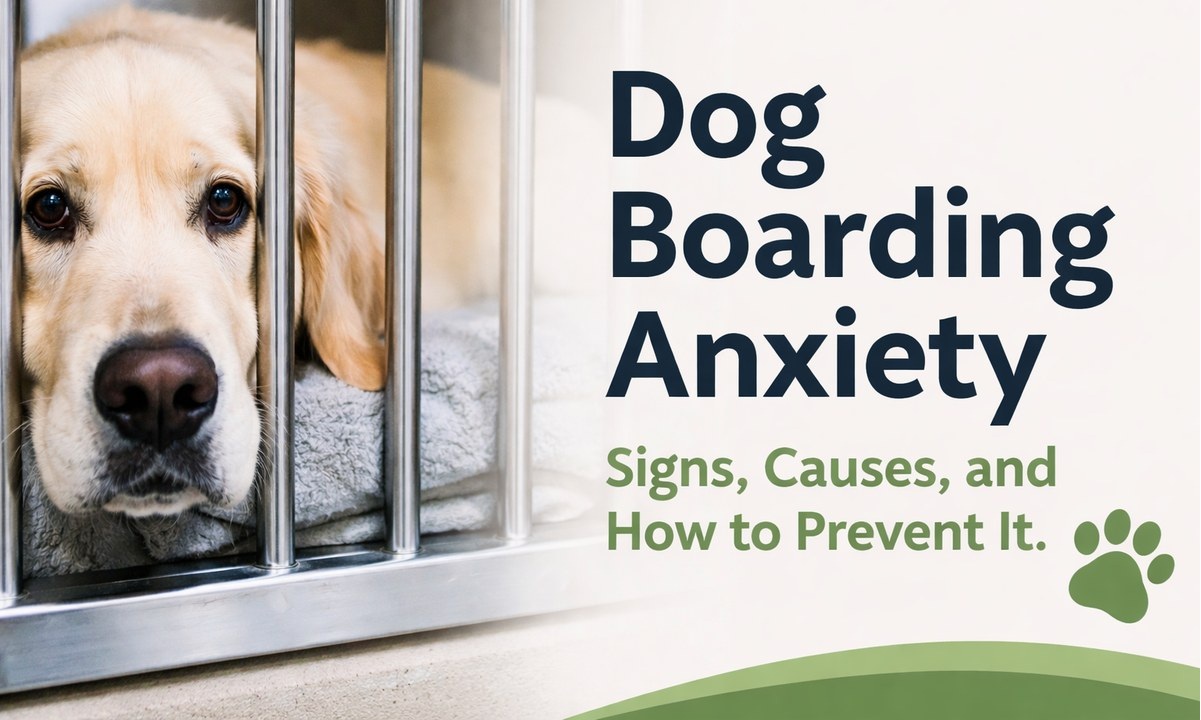
Dog Boarding Anxiety: Signs, Causes, and How to Prevent It
Worried your dog will be stressed during boarding? Learn the real signs of dog boarding anxiety, what causes it, and how structured boarding can prevent it.
Leaving your dog at a boarding facility can be stressful
Leaving your dog at a boarding facility can be stressful for both you and your dog. One of the most common concerns owners have is whether their dog will feel anxious or unhappy while boarding.
The truth is that dog boarding anxiety is real and happens more often than most facilities admit. But there is an important distinction. Anxiety is not caused by boarding itself. It is caused by how the environment is structured and managed.
In this guide, you will understand the real signs of boarding anxiety, what causes it, and how to prevent it with the right approach.
What is dog boarding anxiety
Dog boarding anxiety refers to stress related behaviours that dogs display when placed in an unfamiliar environment without proper structure, guidance, or emotional support.
This can happen in kennels, daycare environments, and even home boarding setups.
It is important to understand that anxiety is not about the place. It is about the experience the dog has in that place.
A structured environment with clear routines, calm leadership, and controlled interactions will reduce anxiety significantly. An unstructured environment will increase confusion and stress.
Signs your dog is stressed in boarding
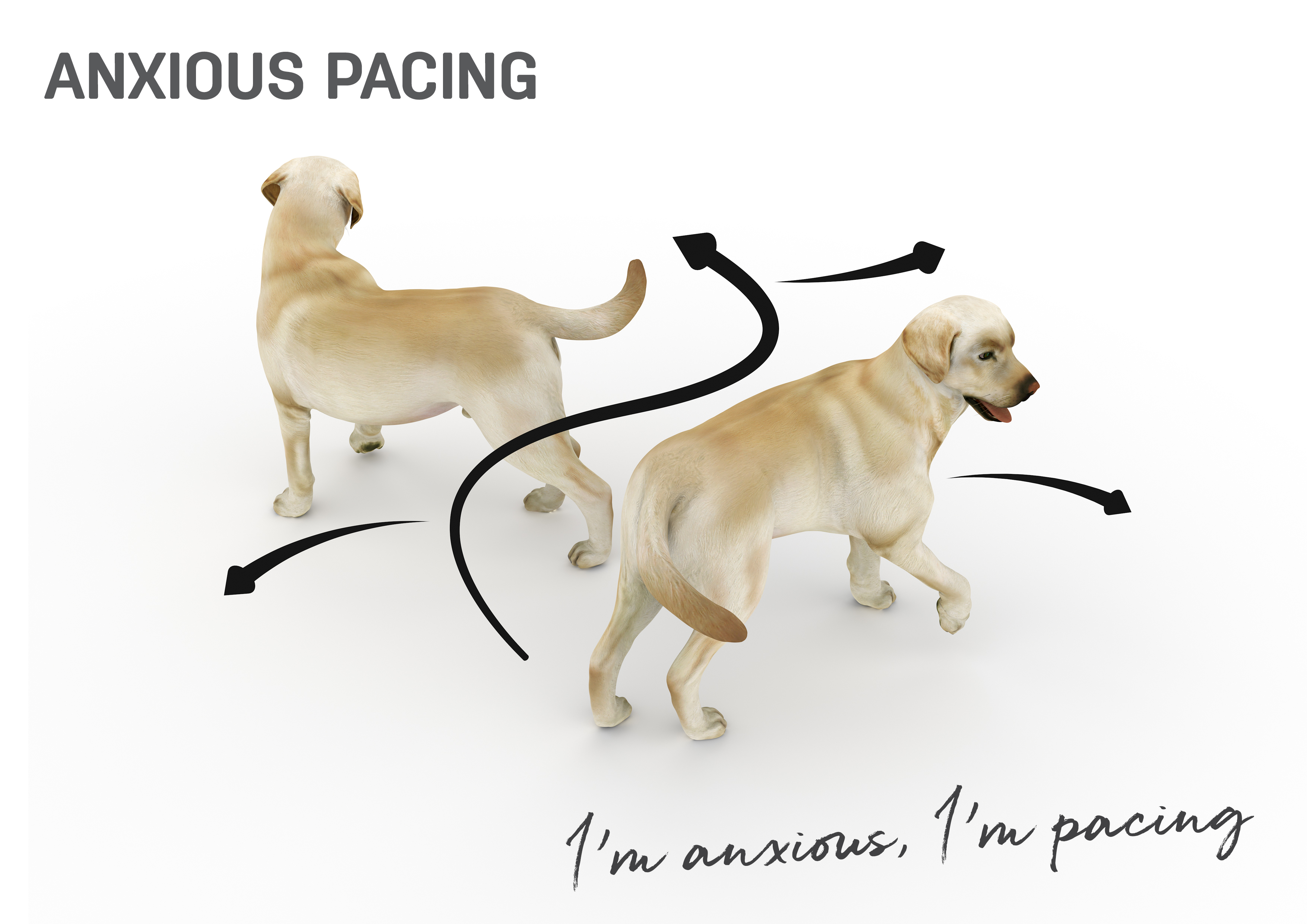
Not all stress looks the same. Some dogs become very active, while others shut down.
Common signs include:
- Refusing food
A dog that suddenly stops eating is often experiencing stress and struggling to settle. - Excessive barking or whining
This usually indicates frustration, confusion, or overstimulation. - Pacing or restlessness
Dogs that cannot relax or settle are not mentally regulated. - Withdrawal or shutdown
Some dogs become quiet, avoid interaction, or hide. - Repetitive behaviours
Licking paws, chewing, or obsessive movements are coping mechanisms linked to anxiety.
Why dog boarding anxiety happens

Most owners assume anxiety comes from being away from their dog, but this is only part of the picture.
Lack of structure
Many facilities rely on free play all day. This creates overstimulation, poor boundaries, and mental fatigue. Dogs become overwhelmed instead of relaxed.
Sudden environment change
New smells, new dogs, new people, and new routines all at once can be confusing without guidance.
No mental guidance
Dogs need direction, rules, and engagement. Without this, they create their own behaviours, which often leads to anxiety.
Separation from the owner
This plays a role, but in a structured environment most dogs adjust quickly because they gain clarity and stability.
The biggest mistake most boarding facilities make
Most boarding facilities focus on physical care such as space, playtime, and supervision.
What is often missing is structure and psychological guidance.
Without this, dogs become overstimulated, develop unwanted behaviours, and reinforce bad habits.
This is why many dogs return home more reactive, more excitable, or with new behavioural issues.
Boarding should not be passive. It should be structured, controlled, and guided.
How to prevent dog boarding anxiety
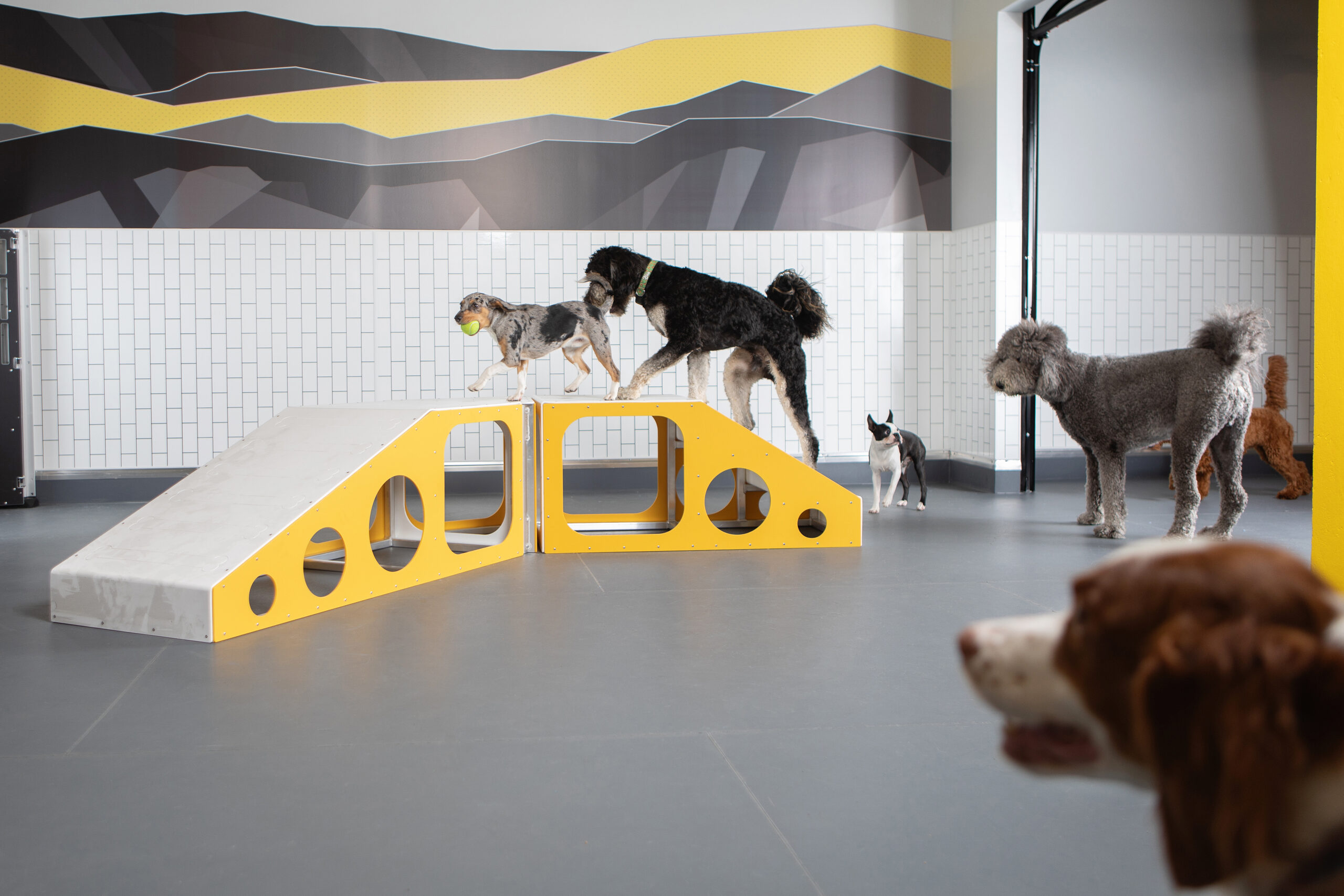
Preventing anxiety is not about comfort. It is about clarity and structure.
- Choose structured boarding
The environment should include controlled interactions, scheduled rest, and supervised socialisation. Dogs should not be left in uncontrolled group play. - Include training during boarding
Training provides mental stimulation, clear communication, and builds confidence. This is why structured boarding and training programs are more effective.
Learn more here - Gradual exposure
Short daycare visits or trial stays help dogs build familiarity before longer boarding periods. - Consistent human interaction
Dogs need calm guidance and leadership, not just supervision. - Avoid overstimulation
A balanced environment reduces anxiety, prevents reactivity, and allows dogs to settle properly.
Boarding vs daycare what is better for your dog
Many owners confuse daycare and boarding, but they serve different purposes.
Daycare can be beneficial when structured properly, but it can also create overstimulation and reinforce unwanted behaviours.
Understanding this difference is essential before choosing the right option.
Read more here: https://www.olivierzoppi.com/is-dog-daycare-good-or-bad
Can boarding improve your dog behaviour
Boarding can improve behaviour when it is done correctly.
With structure, dogs learn calmness, develop better social skills, and become more responsive to commands.
This is the difference between passive boarding and active behavioural development.
When should you be concerned
You should take action if your dog refuses to eat for more than 24 hours, shows strong signs of stress, or comes back home with worse behaviour.
These are indicators that the environment was not suitable.
Final thoughts
Dog boarding does not have to be stressful.
When done correctly, it becomes a structured and positive experience that builds confidence and stability.
The key is choosing a facility that understands dogs need guidance, structure, and leadership, not just supervision.
Explore our boarding and training programs
If you are looking for a safe, structured, and professionally managed boarding environment where your dog is guided and trained, explore our programs here: https://www.olivierzoppi.com/boarding
If you are unsure whether your dog is ready for boarding, contact us and we will guide you:
https://www.olivierzoppi.com/contact
FAQ
Is it normal for dogs to have anxiety when boarding
Yes, especially in unstructured environments. With proper structure, most dogs adjust quickly.
How long does boarding anxiety last
Usually between 24 to 72 hours in a structured environment.
Should I worry if my dog does not eat in boarding
Short term appetite loss can happen, but if it continues beyond 24 to 48 hours it should be addressed.
Is boarding better than leaving my dog at home
In many cases yes, especially when the environment provides structure, supervision, and interaction.
You Might Also Like
Why Your Dog Is Not Listening Even After Training
Your dog still doesn’t listen after training? Discover the real reasons why dog...
Read more
Is Dog Daycare Good or Bad? The Truth Most Owners Don’t Know
Is dog daycare good or bad? Discover the real pros and cons of dog daycare, and...
Read more
Dog Reactivity Explained: Why Your Dog Barks and Lunges on Walks
If your dog barks, lunges, or loses control on walks when seeing other dogs or p...
Read more
Dog Pulling on Leash: How to Stop Leash Pulling in Dogs (Step-by-Step)
If your dog pulls on the leash during walks, you’re not dealing with stubbornnes...
Read more