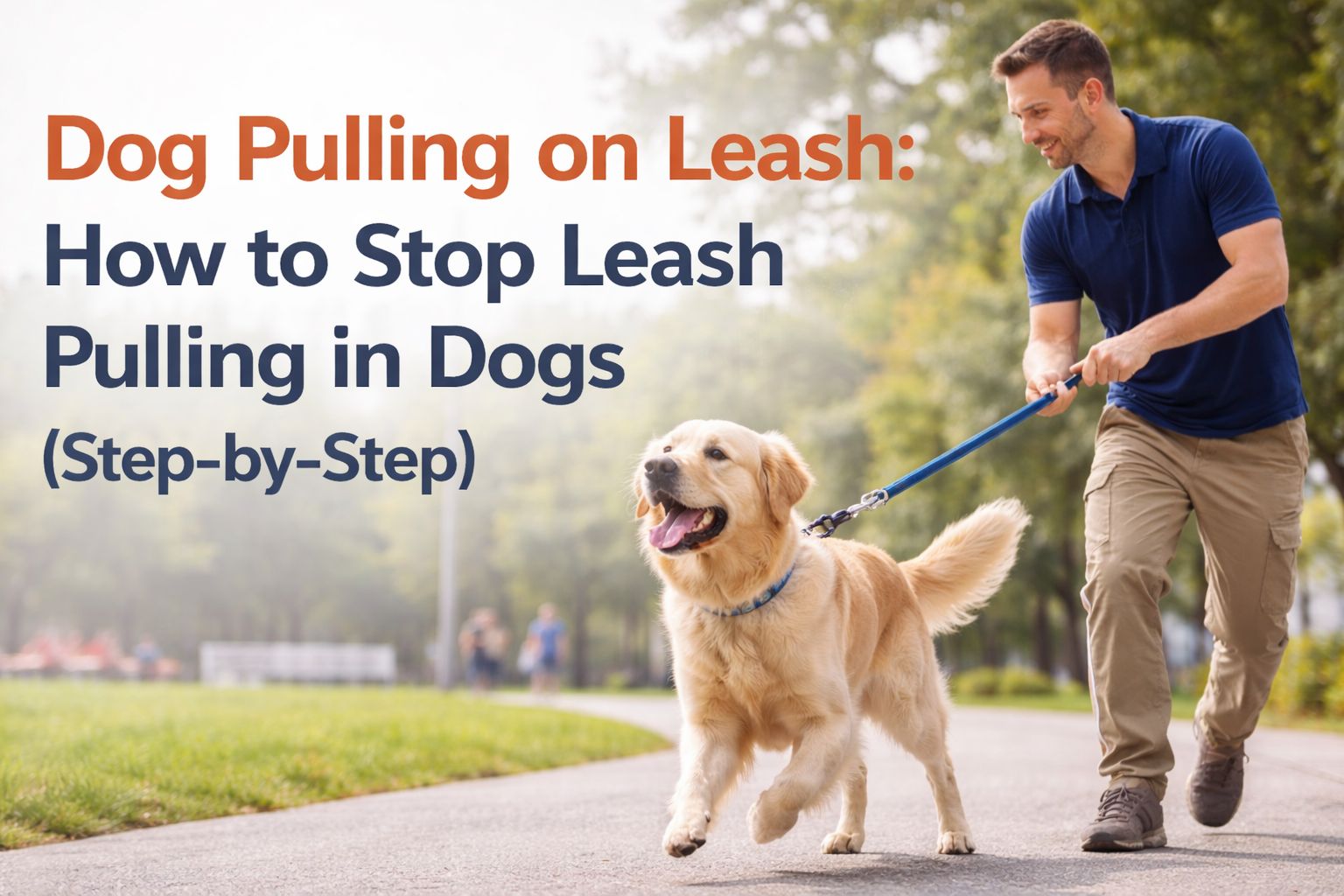
Dog Pulling on Leash: How to Stop Leash Pulling in Dogs (Step-by-Step)
If your dog pulls on the leash during walks, you’re not dealing with stubbornness.You’re dealing with a lack of structure, impulse control, and learned behaviour.Leash pulling is one of the most commo...
If your dog pulls on the leash during walks, you’re not dealing with stubbornness.
You’re dealing with a lack of structure, impulse control, and learned behaviour.
Leash pulling is one of the most common issues dog owners face in Dubai and across the UAE, especially in busy environments where dogs are constantly exposed to people, noise, and distractions.
The problem is not the leash.
The problem is what the dog has learned about movement, excitement, and control.
The good news is that leash pulling can be fixed but only with the right approach.
Why Dogs Pull on the Leash
Dogs pull because it works.
When a dog pulls forward and reaches:
- A person
- Another dog
- A smell
- A destination
It learns:
👉 “Pulling gets me what I want”
Over time, this becomes automatic behaviour.
Not All Leash Pulling Is the Same
Understanding why your dog pulls is critical.
Excitement-Based Pulling
- The dog rushes forward
- High energy, no control
- Often combined with jumping
Frustration Pulling
- The dog wants to reach something, but cannot
- Builds tension
- Often leads to barking
Habit-Based Pulling
- The dog has always pulled
- No structure was introduced early
- Behaviour is deeply ingrained
Environment-Driven Pulling
- The dog walks fine at home
- Pulls outside or in busy areas
This is not disobedience, it’s overstimulation.
Why Most Leash Training Fails
Most owners try to fix pulling using techniques without fixing the behaviour.
Common reasons training fails:
- Allowing pulling sometimes
- Inconsistent corrections
- No structure in walks
- Expecting obedience in high-distraction environments
- Starting training too late
If the dog is already overexcited, training will not work.
Step-by-Step: How to Stop Leash Pulling
This is the structure that actually works.
Step 1: Stop Rewarding the Pull
The rule must be clear:
👉 Pulling = no movement
If your dog pulls:
- Stop walking immediately
- Do not move forward
- Reset the position
If pulling still leads to progress, the behaviour will continue.
Step 2: Teach the Correct Walking Position
Your dog must understand where to walk.
Start in low-distraction environments.
Teach:
- Walking next to you
- Loose leash = movement
- Tension = stop
Clarity is key.
Step 3: Control the Walk (You Lead, Not the Dog)
Walks are not free-roaming.
You control:
- Direction
- Pace
- Stops
If the dog leads, pulling becomes normal.
Step 4: Reward Calm Movement
Do not only correct mistakes.
Reward:
- Loose leash
- Calm walking
- Focus on you
This builds the correct behaviour faster.
Step 5: Train With Distractions Gradually
Do not start training in busy environments.
Build progress:
- Home
- Quiet area
- Moderate distractions
- Busy environments
Skipping steps leads to failure.
Real-Life Situations (What to Do)
Dog Pulls Toward Other Dogs
- Do not allow greeting while pulling
- Create distance
- Reward calm behaviour
If pulling leads to interaction, it will continue.
Dog Pulls Toward People
- Stop movement immediately
- Wait for calm
- Reward controlled behaviour
Dog Pulls Only Outside
This is overstimulation.
Solution:
- Reduce environment difficulty
- Build control gradually
The dog is strong and Hard to Control
This is not about strength, it’s about structure.
Without structure, even small dogs pull.
Common Mistakes That Make Pulling Worse
- Letting the dog pull “just this once”
- Using force without teaching behaviour
- Allowing greetings when pulling
- Training only sometimes
- Expecting fast results without consistency
Dogs learn through repetition.
When Leash Pulling Becomes a Bigger Problem
Leash pulling is often the beginning of more serious issues.
It can lead to:
- Reactivity
- Barking at dogs or people
- Loss of control in public
- Overexcitement
At this stage, it is no longer just a walking issue.
How This Connects to Overexcitement
Leash pulling is rarely just about walking.
It is usually linked to:
👉 lack of impulse control
If your dog is:
- Pulling
- Jumping
- Overreacting
You should also address the root cause.
Read our guide on how to calm an overexcited dog to understand this better.
When You Should Get Professional Help
You should consider structured training if:
- You cannot control your dog on walks
- The behaviour is not improving
- Your dog pulls toward everything
- Pulling is combined with barking or lunging
These cases require proper guidance and structured training.
Why Structured Training Works Faster
Leash training is not just about technique.
It requires:
- Correct timing
- Consistency
- Controlled environments
- Behaviour understanding
This is why many owners struggle doing it alone.
Final Thoughts
Your dog is not pulling because it is disobedient.
It is pulling because:
👉 it has learned that pulling works
Changing this behaviour requires:
- Clear rules
- Consistency
- Structured training
When done correctly, walks become calm, controlled, and enjoyable.
FAQ: Dog Pulling on Leash
Why does my dog pull so much on walks?
Because pulling has been reinforced over time.
Should I use a harness or collar?
Tools help, but they do not fix behaviour without training.
How long does it take to fix leash pulling?
With consistency, improvement can be seen quickly, but full reliability takes time.
Why does my dog pull more outside than at home?
Because of higher stimulation and distractions.
Need Help With Your Dog?
If your dog pulls on the leash, struggles with control, or becomes overexcited during walks, structured training can make a significant difference.
We work with dogs across Dubai and Abu Dhabi, focusing on real-world behaviour, controlled exposure, and long-term results.
Book your free assessment here
You Might Also Like
Why Your Dog Is Not Listening Even After Training
Your dog still doesn’t listen after training? Discover the real reasons why dog...
Read more
Is Dog Daycare Good or Bad? The Truth Most Owners Don’t Know
Is dog daycare good or bad? Discover the real pros and cons of dog daycare, and...
Read more
Dog Reactivity Explained: Why Your Dog Barks and Lunges on Walks
If your dog barks, lunges, or loses control on walks when seeing other dogs or p...
Read more
Dog Overexcited When Greeting People: How to Calm an Overstimulated Dog
If your dog becomes uncontrollable when people come over, jumps excessively, bar...
Read more