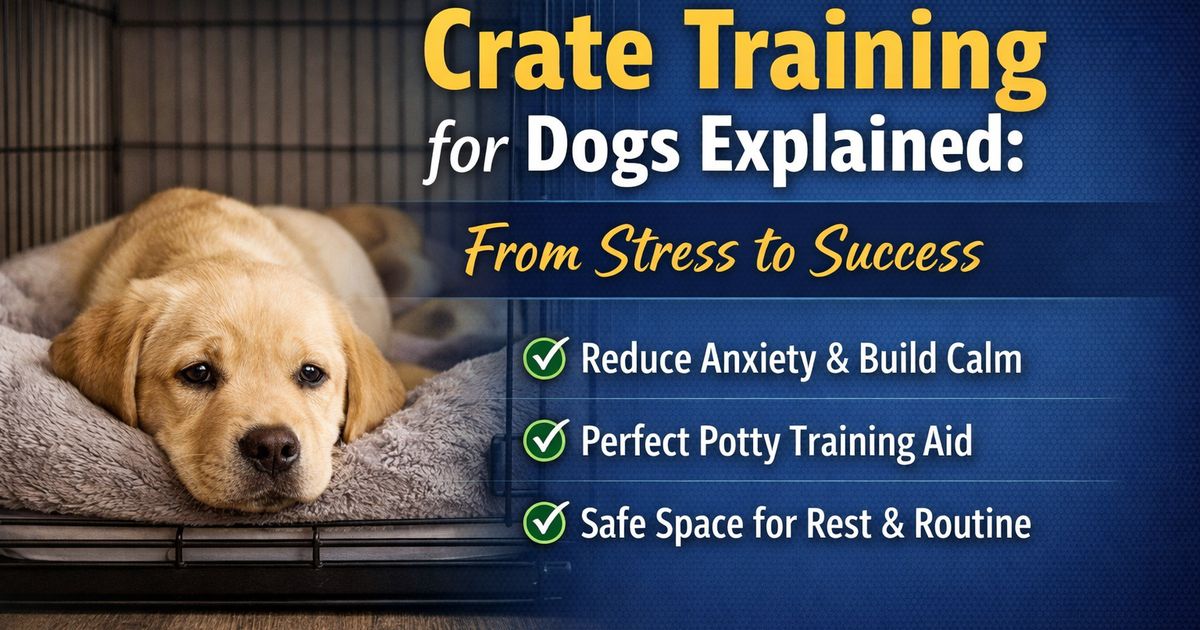
Crate Training for Dogs Explained: From Stress to Success
Crate Training for Dogs Explained: From Stress to SuccessCrate training for dogs is one of the most misunderstood training tools. Many owners worry it’s cruel or stressful, but when done correctly, cr...
Crate Training for Dogs Explained: From Stress to Success
Crate training for dogs is one of the most misunderstood training tools. Many owners worry it’s cruel or stressful, but when done correctly, crate training actually reduces anxiety, builds structure, and creates calm behaviour at home.
In professional training environments including board & train programs the crate is not about confinement, it’s about clarity and emotional safety.
Dogs are den animals by nature. A properly introduced crate becomes a place to switch off, not a punishment box.
Why Crate Training Works (When Done Right)
Dogs thrive on predictability. A crate provides clear boundaries and removes decision-making pressure, especially for puppies and anxious dogs.
Instead of roaming, overstimulating themselves, or developing destructive habits, the dog learns when to rest and when to engage. This is why crate training is often the missing piece behind failed potty training, separation anxiety, leash pulling indoors, and hyperactivity at home.
Crate training also accelerates learning. When rest is structured, dogs retain training faster, regulate emotions better, and show fewer stress behaviours. In hot climates like the UAE where outdoor exercise timing is limited this structured rest becomes even more important.
How to Introduce the Crate Without Stress
Success starts with association, not duration. The crate should never be forced or used to isolate a dog emotionally. Begin by placing the crate in a quiet but social area of the home. Keep the door open. Toss high-value rewards inside and allow the dog to enter and exit freely. Meals can be fed inside the crate to create positive repetition.
Once the dog chooses the crate willingly, short closures can be introduced seconds at first, then minutes. Calm behavior is rewarded; whining or scratching is ignored, not corrected.
The dog learns that calm opens doors, not noise. This is how crate training builds emotional regulation instead of frustration.
Crate Training Puppies vs Adult Dogs
Puppy crate training focuses on routine and bladder control. Puppies should follow a clear cycle: crate → toilet → play → crate. This structure prevents accidents and teaches impulse control fast. Adult dogs, especially rescues, often need crate training to decompress, not to learn basics. For them, the crate becomes a safe retreat from household chaos, guests, or other dogs.
In both cases, timing matters more than crate size. Over-crating causes stress; under-structuring causes chaos. Balance is key.
Common Crate Training Mistakes to Avoid
The biggest mistake is using the crate emotionally locking the dog away when frustrated. Another is releasing the dog while whining, which teaches vocal behavior. Inconsistent routines also sabotage results. Dogs don’t generalize well; if the crate rules change daily, anxiety increases instead of decreases.
Crate training should never replace exercise, training, or social interaction. It supports them. When owners try to “crate their way out” of behavior problems, progress stalls.
When Crate Training Becomes a Behavior Solution
Crate training is often the foundation behind successful solutions for:
- Potty training failures
- Separation anxiety
- Overexcitement indoors
- Destructive chewing
- Boarding stress
- Inconsistent obedience at home
This is why professional trainers rely on crates—not as confinement, but as behavioural structure.
Next logical reads
- How to Stop a puppy from biting: proven puppy training strategies used by Olivier Zoppi
- Ultimate Guide to Puppy Training for New UAE Dog Owners
If crate training feels overwhelming or your dog is already showing stress behaviours, professional guidance can shorten the process dramatically and prevent long-term issues. Just reach out to out team, we can help.
You Might Also Like
Why Your Dog Is Not Listening Even After Training
Your dog still doesn’t listen after training? Discover the real reasons why dog...
Read more
Is Dog Daycare Good or Bad? The Truth Most Owners Don’t Know
Is dog daycare good or bad? Discover the real pros and cons of dog daycare, and...
Read more
Dog Reactivity Explained: Why Your Dog Barks and Lunges on Walks
If your dog barks, lunges, or loses control on walks when seeing other dogs or p...
Read more
Dog Pulling on Leash: How to Stop Leash Pulling in Dogs (Step-by-Step)
If your dog pulls on the leash during walks, you’re not dealing with stubbornnes...
Read more