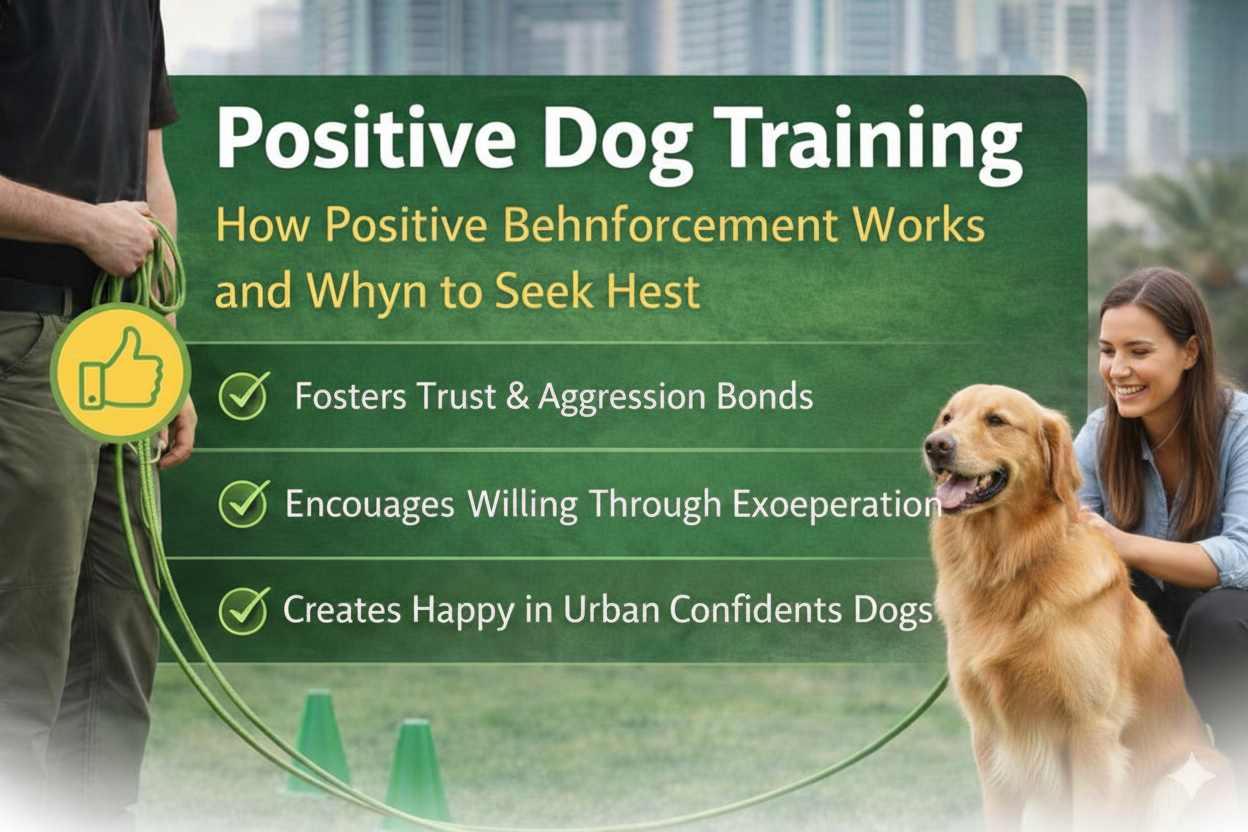
Positive Dog Training: How Positive Reinforcement Works and Why It’s Best
Learn how positive reinforcement dog training builds calm, reliable behaviour. Discover why reward based training works best in the UAE.
Positive Dog Training: How Positive Reinforcement Works and Why It’s Best
Positive dog training is not about permissiveness. It is about clarity.
Modern behaviour science shows that dogs learn most reliably when behaviours are reinforced rather than suppressed.
Positive reinforcement dog training focuses on rewarding desired actions, so they become consistent, predictable responses.
In structured environments, this approach creates calm, confident dogs who understand expectations clearly.
What Is Positive Reinforcement Dog Training
Positive reinforcement means adding something the dog values immediately after a desired behaviour.
That reward may be:
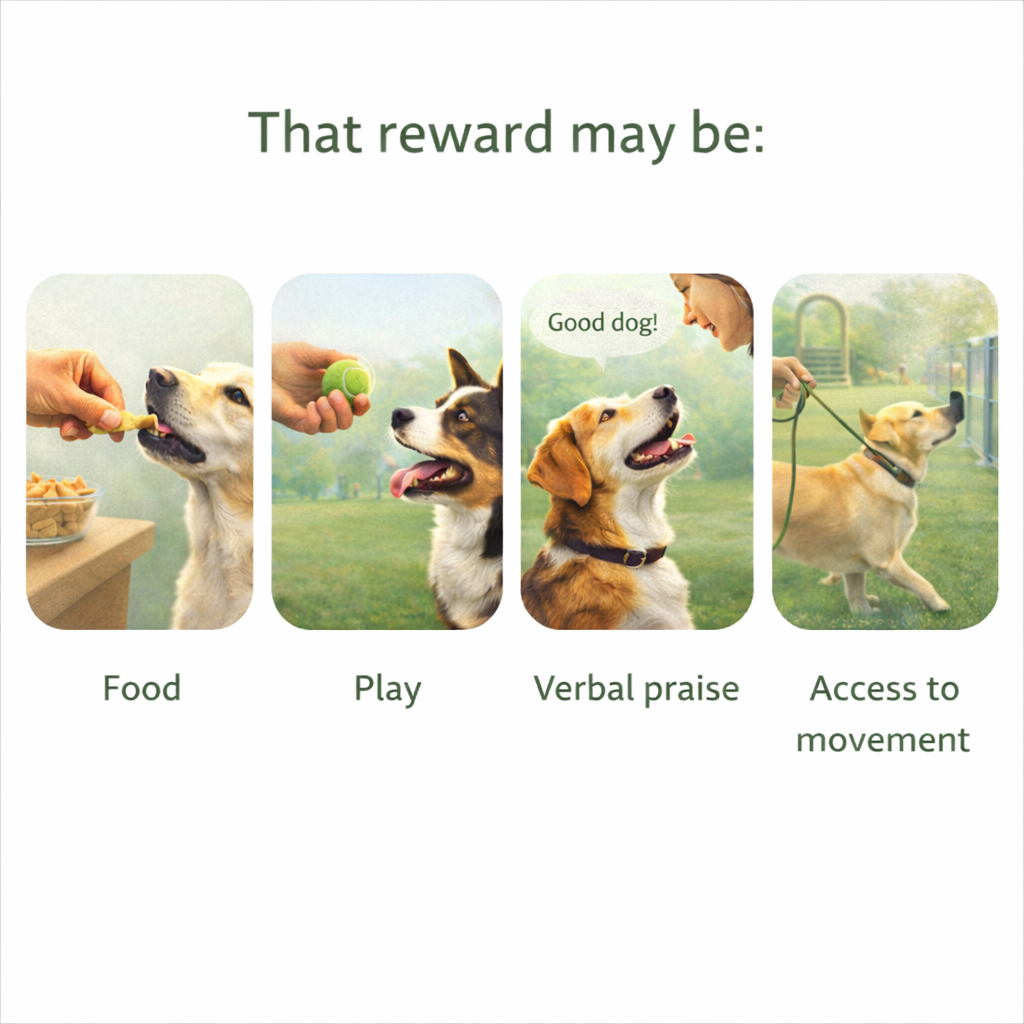
• Food
• Play
• Verbal praise
• Access to movement
• Environmental release
When timing is precise, the dog associates the behaviour with a positive outcome. Repetition strengthens the neural pathway.
Reward based dog training does not ignore boundaries. It teaches alternatives.
Why Positive Dog Training Works Better
Dogs repeat behaviours that work.
Punishment may stop behaviour temporarily, but it does not change emotional association. In fear-based cases, correction often increases stress and unpredictability.
Positive reinforcement creates:
• Clear communication
• Emotional stability
• Faster learning
• Stronger engagement
• Long-term reliability
In high-density urban environments like the UAE, clarity and calmness are essential. Elevators, parks, and busy walkways require dogs to think under stimulation. Reinforcement builds decision-making skills rather than fear responses.
Does Positive Training Work for Serious Behaviour Issues
Yes, when structured correctly.
Aggression, reactivity, and anxiety cases still rely on reinforcement principles. The difference lies in:
• Space management
• Controlled exposure
• Trigger threshold awareness
• Reinforcement timing
As discussed in our guide on aggressive dog training, behavioural modification changes emotional response before expecting obedience.
Positive reinforcement does not mean ignoring structure. It means building the correct emotional association first.
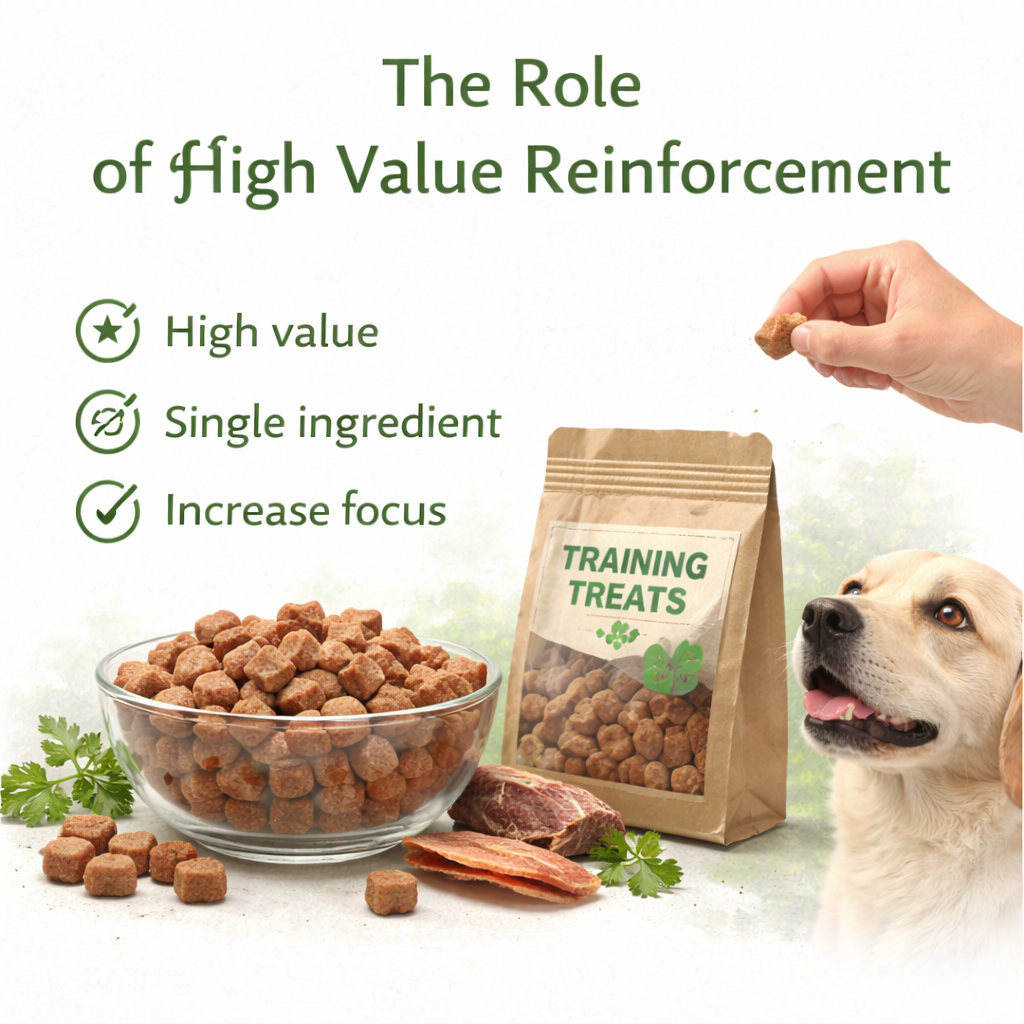
The Role of High Value Reinforcement
The quality of the reward matters.
High-value, clean, single-ingredient training treats increase focus during learning sessions. They allow precise timing without overstimulation. When working through distraction-heavy environments, reinforcement must compete with environmental triggers.
Timing and quality directly influence progress.
When Structure Enhances Positive Training
Positive training works best inside structured environments.
• Controlled group sessions allow dogs to practice around distractions safely
• In-home consultations address environment specific triggers
• Integrated training environments reinforce calm behaviour daily
• Immersive structured programs provide repetition for more entrenched cases
Reinforcement is powerful, but consistency is what creates stability.
Common Misconceptions About Positive Dog Training
It means never saying no
Incorrect. Boundaries still exist. The difference is how behaviour is redirected.
It only works for puppies
Incorrect. Adult dogs learn through reinforcement as effectively as young dogs.
It cannot fix aggression
Incorrect. Behaviour modification programs rely heavily on reinforcement timing and controlled exposure.
How to Apply Positive Reinforcement at Home
- Reward immediately after the desired behaviour
- Keep sessions short and structured
- Avoid repeating cues excessively
- Remove reinforcement when behaviour is incorrect
- Stay consistent
Positive reinforcement is not random reward distribution. It is precise behavioural shaping.
Frequently Asked Questions
Is positive dog training effective long-term
Yes. When applied consistently, reinforced behaviours become habitual and reliable.
Is positive reinforcement better than correction-based training
Reinforcement builds emotional stability and engagement. Suppression may stop behaviour temporarily, but does not address underlying emotional drivers.
Can reward-based dog training work in busy environments
Yes, when structured exposure and reinforcement timing are used correctly.
What rewards work best in training
High-value food rewards, structured play, and controlled access to movement are most effective.
You Might Also Like
How to Stop Your Dog from Jumping on People
Learn how to stop your dog from jumping on people using simple, effective traini...
Read more
How to Find the Best Dog Behaviourist in the UAE
Searching for a dog behaviourist near you in Dubai or the UAE? Learn how to choo...
Read more
Separation Anxiety in Dogs: Signs, Causes and How to Help
Separation anxiety in dogs is one of the most misunderstood behavioral issues. I...
Read more
Why Your Dog Is Not Listening Even After Training
Your dog still doesn’t listen after training? Discover the real reasons why dog...
Read more