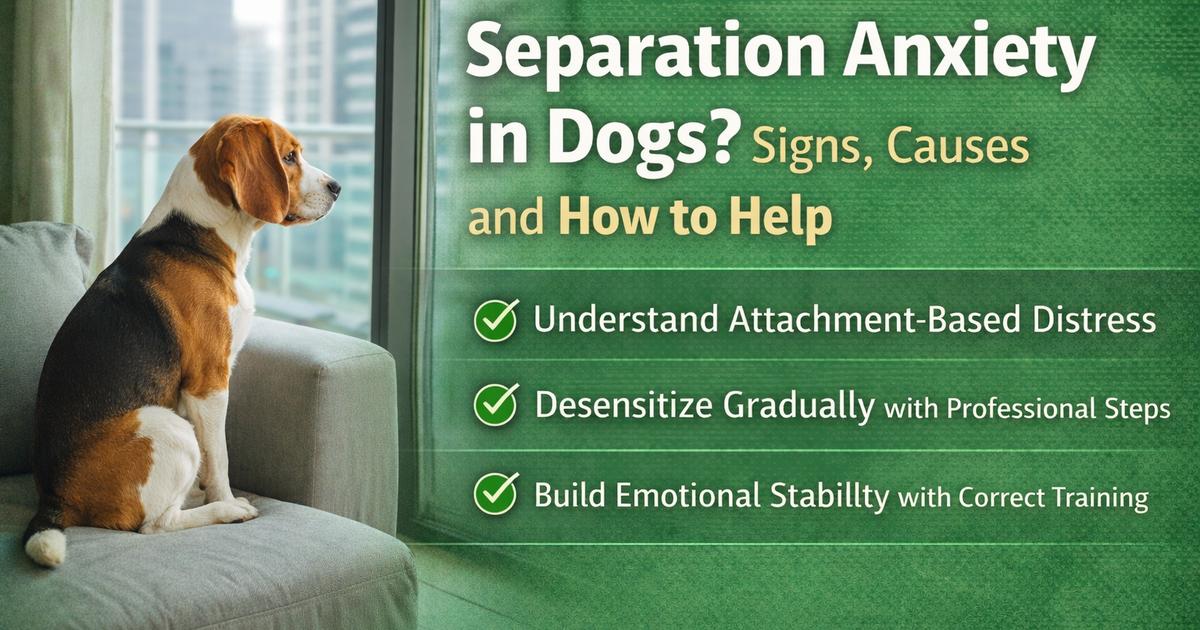
Separation Anxiety in Dogs: Signs, Causes and How to Help
Separation anxiety in dogs is one of the most misunderstood behavioral issues. It is not disobedience. It is not stubbornness. It is a panic response triggered by isolation.In urban environments such...
Separation anxiety in dogs is one of the most misunderstood behavioral issues. It is not disobedience. It is not stubbornness. It is a panic response triggered by isolation.
In urban environments such as Dubai, where many dogs live in apartments and owners maintain demanding schedules, anxiety when left alone can escalate quickly. Barking, destruction, pacing, and attempts to escape are not “bad behavior.” They are symptoms of distress.
Effective dog separation anxiety training focuses on emotional regulation, not punishment.
What Separation Anxiety Actually Looks Like

True separation anxiety goes beyond mild whining.
Common signs include:
• Excessive barking or howling immediately after departure
• Destructive behaviour focused on doors or exit points
• Drooling, pacing, or trembling
• Urination or defecation despite being house trained
• Attempts to escape confinement
The key pattern is panic that begins shortly after the owner leaves. Many dogs appear calm while the owner prepares to go out, but anxiety spikes once the absence becomes real.
This differs from boredom or lack of exercise. It is attachment-based distress.
Why Separation Anxiety Develops
Several factors contribute to separation anxiety in dogs:
• Sudden changes in routine
• Rehoming or adoption transitions
• Over-attachment without independence training
• Lack of structured rest
• Inconsistent departure rituals
Dogs that never learn to self-soothe struggle when left alone. Independence must be taught gradually.
Foundational structure plays a major role. Proper crate conditioning, when introduced correctly, builds emotional stability and teaches a dog to relax independently. As explained in our Crate Training for Dogs Explained: From Stress to Success, confinement done correctly can reduce anxiety rather than increase it.
Structure builds security.
The Biggest Mistake Owners Make
The most common error is trying to “tire the dog out.”
While exercise is important, physical fatigue does not eliminate emotional panic. A tired anxious dog is still anxious.
Another mistake is dramatic departures and emotional reunions. These amplify the significance of absence and return.
Calm exits and calm entries reduce emotional intensity over time.
How Dog Separation Anxiety Training Works
Successful separation anxiety training focuses on gradual desensitization.
This includes:
• Teaching the dog to settle independently while the owner is home
• Building duration slowly, starting with seconds
• Removing cues that predict long absences
• Reinforcing calm behavior during short departures
High-value reinforcement can support this process. The quality of reward matters. Clean, single-ingredient training treats help maintain engagement without overstimulation. Timing is critical. Reinforcement must occur when the dog remains calm, not after escalation.
Consistency builds resilience.
Why Environment Matters
Dogs struggling with separation anxiety often lack exposure to structured independence.
Controlled training environments can accelerate progress by teaching dogs to settle away from their primary attachment figure. Professionally guided group sessions or structured daycare programs that integrate training help dogs practice calm behavior around stimulation without constant owner proximity.
This changes the dog’s emotional framework. Independence becomes familiar instead of threatening.
For moderate to severe cases, immersive training programs may provide the consistency and structured repetition required to reset behavioral patterns safely.
The goal is not isolation. The goal is emotional confidence.
When to Seek Professional Help
If your dog:
• Injures themselves attempting to escape
• Damages doors or windows
• Shows escalating panic
• Cannot tolerate even short absences
Professional behavioral guidance becomes important.
Separation anxiety is one of the few issues where incorrect handling can worsen the problem quickly. Early intervention shortens recovery time and prevents long-term stress patterns.
The Long-Term Goal
The objective is not to make your dog “independent.” It is to teach emotional stability.
A dog that can self-regulate when alone becomes calmer in other contexts as well. You will often see improvements in leash behavior, impulse control, and general responsiveness once anxiety decreases.
Behavior is interconnected.
With structure, clarity, and correct reinforcement, most dogs can learn to remain calm when left alone.
If these tips where not enough to get you trough the process of crate training our team can help you
You Might Also Like
How to Stop Your Dog from Jumping on People
Learn how to stop your dog from jumping on people using simple, effective traini...
Read more
Positive Dog Training: How Positive Reinforcement Works and Why It’s Best
Learn how positive reinforcement dog training builds calm, reliable behaviour. D...
Read more
How to Find the Best Dog Behaviourist in the UAE
Searching for a dog behaviourist near you in Dubai or the UAE? Learn how to choo...
Read more
Why Your Dog Is Not Listening Even After Training
Your dog still doesn’t listen after training? Discover the real reasons why dog...
Read more