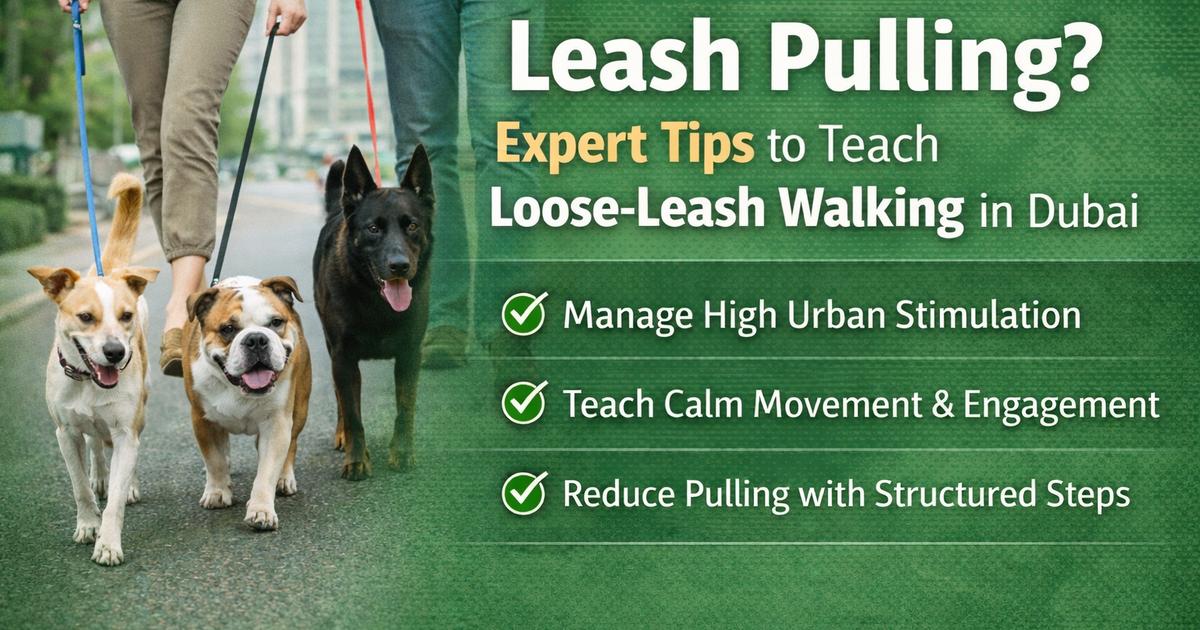
Leash Pulling? Expert Strategies to Teach Loose-Leash Walking in Dubai
Leash Pulling? Expert Strategies to Teach Loose-Leash Walking in DubaiLeash pulling is one of the most common frustrations dog owners face. In a city like Dubai with elevators, traffic noise, other do...
Leash Pulling? Expert Strategies to Teach Loose-Leash Walking in Dubai
Leash pulling is one of the most common frustrations dog owners face. In a city like Dubai with elevators, traffic noise, other dogs in close proximity, and high environmental stimulation loose-leash walking becomes less about obedience and more about emotional regulation.
Most dogs do not pull because they are dominant or disobedient. They pull because pulling has been reinforced. It moves them forward. It grants access to smells, people, and motion. Over time, the behaviour strengthens.
Correcting the leash rarely solves the problem. Teaching calm movement does.
Why Dogs Pull on the Leash
Pulling is often a symptom of arousal.
The higher the stimulation, the stronger the forward drive. In busy residential towers, near parks, or in high-traffic walking areas, dogs experience constant sensory input. If they have not learned to regulate that stimulation, tension appears in the leash.
Common contributors include:
- Overexcitement before leaving the house
- Inconsistent leash rules
- Lack of impulse control foundations
- Minimal structured rest
Limited exposure to controlled distractions
In many cases, leash behaviour improves once the dog learns to regulate energy indoors. Structured routines such as those outlined in Crate Training for Dogs Explained: From Stress to Success create a calmer starting point before the walk even begins.
Calm dogs walk better.
The Walk Starts Before the Door Opens
Loose-leash walking begins inside the home.
If the leash appears and the dog immediately jumps, spins, or vocalises, the nervous system is already elevated. Walking at that moment reinforces excitement.
Instead, pause. Wait for neutral body language, four paws on the floor, soft posture, quiet focus. Only when calm appears does access to movement begin.
This simple shift changes the meaning of the leash from a stimulation trigger to a structured activity.
Teaching Loose-Leash Walking: A Structured Method
Training should begin in low-distraction environments. The goal is not distance it is consistency.
Maintain visible slack in the leash. The moment tension appears, stop moving. Do not pull back. Do not repeat cues. Stillness removes the reward of forward motion.
When the dog releases pressure or re-engages with you, movement resumes.
Forward access becomes contingent on leash slack.
Short, focused sessions are significantly more effective than long, uncontrolled walks. Progress is measured in quality of steps, not kilometres.
For young dogs, foundations matter. Our Ultimate Guide to Puppy Training for New UAE Dog Owners explains how early structure prevents leash-related issues from developing.
Why Training Around Distractions Changes Behaviour
One of the most overlooked elements of loose-leash walking is exposure.
Dogs that only practice in quiet environments often struggle when distractions increase. Behaviour must be generalized.
Structured environments such as professionally guided group classes or daycare programs that integrate training allow dogs to practice calm walking around movement, other dogs, and environmental stimulation in a controlled setting.
This repetition reshapes perception. Distractions become normal instead of overwhelming. As a result, leash tension decreases because emotional intensity decreases.
Dogs trained consistently around structured distractions tend to show greater reliability in busy streets, residential areas, and public spaces.
In cities like Dubai, this exposure is often the missing piece between occasional success and dependable behaviour.
When Pulling Is Actually Reactivity
If leash tension is accompanied by:
- Fixation on other dogs
- Lunging
- Barking
Stiff body posture
The issue may extend beyond loose-leash walking into reactivity.
In these situations, distance management and carefully structured exposure are required. Simply “walking through it” can reinforce the response.
Impulse control patterns often overlap. Dogs that struggle with overexcitement or biting during play may show similar difficulty regulating energy on leash. You can see how these behavioural connections develop in How to Stop Puppy Biting: Proven Puppy Training Strategies Used by UAE Trainers.
Behaviour rarely exists in isolation.
Professional Guidance in Real-Life Environments
Some leash issues are situational, such as elevators, lobby encounters, and specific neighbourhood triggers. In these cases, targeted home visits can address real-world patterns directly.
For dogs requiring higher repetition or reset-level structure, immersive training programs can accelerate progress by controlling exposure, timing, and consistency.
The key is not intensity. It is clarity and repetition in the right environment.
The Real Goal: Engagement
Loose-leash walking is not about forcing position. It is about voluntary engagement.
When a dog chooses to remain connected despite distractions, pulling naturally fades. That level of engagement is built through structure, consistency, and controlled exposure not strength.
In high-stimulation environments, reliability is earned through repetition.
Our group classes are amazing for working on a loose leash walk
You Might Also Like
Why Your Dog Is Not Listening Even After Training
Your dog still doesn’t listen after training? Discover the real reasons why dog...
Read more
Is Dog Daycare Good or Bad? The Truth Most Owners Don’t Know
Is dog daycare good or bad? Discover the real pros and cons of dog daycare, and...
Read more
Dog Reactivity Explained: Why Your Dog Barks and Lunges on Walks
If your dog barks, lunges, or loses control on walks when seeing other dogs or p...
Read more
Dog Pulling on Leash: How to Stop Leash Pulling in Dogs (Step-by-Step)
If your dog pulls on the leash during walks, you’re not dealing with stubbornnes...
Read more